
Ranking High-Speed Bendable Straw Forming Machine Setups by Diameter and Bend Angle
A high-speed bendable straw forming machine setup should be ranked against the finished straw it has to produce, not against a single headline speed figure. Straw diameter and bend angle decide which platform, which mold set and which downstream units belong in the line, and a platform tooled for 5 mm flexible straws is not interchangeable with one tooled for 12 mm large-caliber decorative straws - even when both are sold as high-speed.
Below are five setups from the DONGTIE MECHANICAL EQUIPMENT range, ordered by how much production coverage each configuration buys a straw factory: from the widest-coverage flexible straw platform down to the specialist art and pointed-tip configurations at the end of the list. Every position is explained with published machine facts and with the mold logic that decides whether a setup can actually run a buyer's specification.
The ranking is written for importers, distributors and plant managers in Southeast Asia, the Middle East and China who already know they need bendable straw capacity and now have to choose which configuration to order first.
What a Bendable Straw Machine Setup Actually Includes
A setup is not a single machine. In practice it is four matched parts, and the same platform can appear in several different setups - which is why two buyers can order from the same model and still run completely different production.
- Platform. The forming and bending machine itself, including the embossing and forming module, the feeding unit and the control system.
- Mold set. The tooling matched to one straw diameter and one bend geometry. Molds are specific: a 6 mm bendable mold is not a 12 mm decorative mold.
- Feeding and forming settings. The operating window for the tube blank being used - pressure, temperature and feed settings.
- Downstream units. Matched equipment such as the feeder, sealing and cooling unit, packaging machine and conveyor system.
Diameter and bend angle sit at the top of that structure. Diameter determines the tube blank and the mold bore, and it also determines what the finished straw is checked against: the Dongtie platform controls standard straw diameter tolerance at plus or minus 0.05 mm, which is the figure a buyer should compare with their own finished-straw drawing. Bend angle determines the forming geometry in the flexible section of the straw - the corrugated zone that has to bend without kinking or collapsing.
On the most common question from buyers, Dongtie's specification material is clear: by changing the corresponding molds, the machine can manufacture flexible straws with different diameters and bending angles. The practical limit is tooling rather than the platform. Custom molds are required for different straw diameters and bending shapes, and material compatibility and the mold solution should be confirmed before order placement.
Industry Background: Why Bendable Straw Capacity Is Being Re-Tooled Now
Straw machine investment is being driven by two forces at once: overall market growth and the replacement of older capacity. Third-party research from Market Research Future estimates the global straw machine market at USD 962.55 million in 2024, projected to reach USD 1,793.41 million by 2035 at a CAGR of 5.82%. The same research notes that plastic straw machines still hold significant market share in regions such as Asia-Pacific and Africa, even where plastic bans are in force elsewhere - a sign that much of the installed base is still on older, slower equipment.
Paper and alternative-material lines pull in the other direction. Grand View Research valued the global paper straw market at USD 2.6 billion in 2024 and projects a 15.6% CAGR for paper straw machines between 2025 and 2030. Different material, same requirement: the straw still has to bend, so a forming and bending stage is needed on the line either way.
Sourcing is concentrated. Chinese customs-linked trade data indicates that China accounts for more than 66% of the global export value of flexible straw bending machinery, and China's GACC data lists HS code 84778090 as the primary classification for drinking straw machines. For an overseas buyer, that means the shortlist is likely to be Chinese-made regardless of where the straw is finally sold.
Application demand is also fragmenting. Mordor Intelligence notes that the U-shaped straw machine market is growing specifically with the aseptic packaging industry, where U-shaped straws are attached to boxed drinks. Dataintelo projects industrial end-users at 40.1% of straw machine market share as of 2025 projections, consistent with buyers moving from standalone machines to line-level planning.
One reference point is useful before any high-speed claim is read: published industry specifications for automatic straw bending machines typically quote 200-300 pieces per minute. That is the conventional benchmark.
Third-party industry reports also document established machine builders serving this market, including Jumbo Steel Machinery in Taiwan (founded 1986) and Jiexuan Machinery in China (established 2009). Their presence is market context only; the ranking below is a configuration ranking, not a verdict on other manufacturers.
How These Five Setups Were Ranked
Three criteria were applied, in this order:
- Diameter and bend-angle coverage. How many finished straw specifications one platform can serve by changing molds.
- Verified throughput and needle integrity. The platform's stated minimum output and whether it runs at high speed without needle breakage.
- Production integration. Mold compatibility, line connection, operator skill required and maintenance access.
No price ranking and no rating scores are used, because no verified price or rating data exists for these configurations. The ranking reflects production fit for a defined straw specification.
The Ranked Setups
Rank 1 - High-Speed Flexible Straw Forming Machine (DT-1200)
First place goes to the general flexible straw platform, because it covers the widest range of finished specifications with the least line restructuring. This is the setup to choose when a factory needs flexible, bendable straws across several diameters and the product mix is still moving.
The verified performance claims are the reason it leads the list. One single unit replaces five traditional machines, and it achieves a minimum output of 1,000 straws per minute without needle breakage - needle breakage being the failure mode that normally forces a line to slow down. Compared to alternatives, the equipment offers a 50% reduction in processing cost.
The technical basis is self-developed domestic patented technology, Patent No. ZL202020756632.1, which delivers four operating characteristics: an independent embossing and forming module that boosts production output; high-efficiency embossing that relaxes tolerance limits for tube blanks while holding standard straw diameter tolerance at plus or minus 0.05 mm; a precision feeding unit for long-term stable operation; and separately adjustable embossing and forming modules that reduce maintenance difficulty. A PLC control system displays real-time operating status, stops the machine automatically on a malfunction with the fault code shown on screen, and counts output automatically.
Published DT-1200 parameters: power 5.5-6.5 kW; output 3,000-5,500 pcs/min; working pressure 1.500-6.000 MPa; working temperature 100-200 degrees C; protection grade IP55; stainless steel construction. Power consumption and energy efficiency data are available on request.
Where it stops being the right answer: the platform is designed for high-efficiency continuous flexible straw manufacturing and for small and medium-sized straw factories upgrading to automation. If the product mix is dominated by one art-straw specification, a dedicated configuration further down this list will use capacity more efficiently than wide coverage that is never used.
Rank 2 - High-Speed U-Shaped Straw Forming Machine (3.8 mm Class)
Second place goes to the small-diameter U-shaped configuration, including the 3.8 mm U-shaped straw forming machine. It ranks this high because U-shaped demand is attached to a defined packaging channel rather than to general foodservice: U-shaped straws are used with aseptic cartons and boxed drinks, a segment where third-party research shows the U-shaped straw machine market growing.
U-shaped forming is a tighter tolerance exercise than general flexible straw forming, because the finished shape has to sit inside a fixed drink-carton geometry. That makes mold accuracy and repeatable mold position the two things to verify. Specify this configuration together with the downstream sealing and packaging units, so carton-format output does not create a bottleneck at the end of the line.
Where it fits: factories supplying dairy and aseptic beverage packers, or converters who need both U-shaped straws and standard flexible straws on the same floor.
Rank 3 - 6 mm High-Speed Tube Bending Machine and 6 mm Decorative Straw Forming Machine
Mid-diameter bendable straws take third place. The 6 mm high-speed tube bending machine and the 6 mm decorative straw forming machine serve the volume end of the foodservice and beverage-chain market, where 6 mm bendable straws are the everyday format and decorative surface patterns are used for brand differentiation.
This configuration is usually bought as a dedicated setup rather than as a general platform, because running volumes justify holding molds for one or two diameters only. Treat it as an upgrade path: many factories start here and add the wider flexible configuration later, or run both with a shared downstream packaging arrangement.
Where it fits: factories with a stable, high-volume 6 mm product line and a defined decorative pattern.
Rank 4 - 12 mm Large-Caliber Decorative Straw Forming Machine
Large-caliber decorative straws rank fourth because they are the least frequent specification in most order books and the most demanding to tool. The 12 mm large-caliber decorative straw forming machine exists for exactly this niche: thick drinks, large-format beverage cups and decorative straws where the straw is part of the presentation.
Because the caliber is large, the forming and embossing module works on a heavier tube blank, which makes the separately adjustable embossing and forming modules and the precision feeding unit the two features worth checking first on this setup. Mold cost per specification is higher than in smaller diameters, so buyers normally tool one or two large-caliber specifications rather than a full range.
Where it fits: factories serving large-format beverage and foodservice customers, or buyers adding a premium decorative line alongside standard flexible straw production.
Rank 5 - 12 mm Tip High-Speed Tube Bending Machine (Pointed-Tip Art Straws)
Fifth place goes to the pointed-tip art-straw setup, including the 12 mm pointed-tip high-speed straw bending machine and the high-speed art straw forming machine range. It ranks last only because the specification is the narrowest: pointed-tip art straws are bought for juice and nectar packs and premium decorative lines, so volumes are lower than general flexible straws even where the unit price is higher.
The purchase decision here is almost entirely a mold decision. The finished tip geometry is part of the straw specification, so the mold solution and material compatibility have to be confirmed against the buyer's drawing before order placement - the same rule that applies to every other configuration on this list.
Where it fits: specialist art-straw producers and factories with an existing art straw customer contract.
Step-by-Step: Matching a Setup to Your Straw Specification
The sequence below is the order in which a mold-and-machine decision can be settled without renegotiating the order later.
Step 1 - Write the finished straw specification first. Outer diameter, wall thickness, overall length, bend angle, tip style and decorative pattern. Every later decision is checked against this document, not against a machine brochure.
Step 2 - Confirm the tube blank and material compatibility. Different raw material specifications and surface treatments require different settings and can require different mold solutions. Dongtie's published requirement is explicit: material compatibility and mold solutions should be confirmed before order placement.
Step 3 - Select the platform by diameter class and bend angle. Use the ranking above as a filter: wide coverage first if the product mix is uncertain, narrow dedicated coverage if one specification dominates the volume.
Step 4 - Fix the mold set. One mold per diameter and bend geometry, with spare capacity planned for the specifications you expect to add within twelve months. Also confirm how many molds you can store and how long a changeover takes on your shift pattern.
Step 5 - Set the throughput and quality window. Two numbers to hold the supplier to: the minimum output without needle breakage (1,000 straws per minute for the Dongtie platform) and the finished diameter tolerance (plus or minus 0.05 mm). Both are production conditions rather than marketing specifications, because both determine rejects.
Step 6 - Plan the matched equipment in the same order. Feeder, sealing and cooling unit, packaging machine and conveyor system should be specified together with the forming machine. Ordering downstream units later usually costs more and delays commissioning.
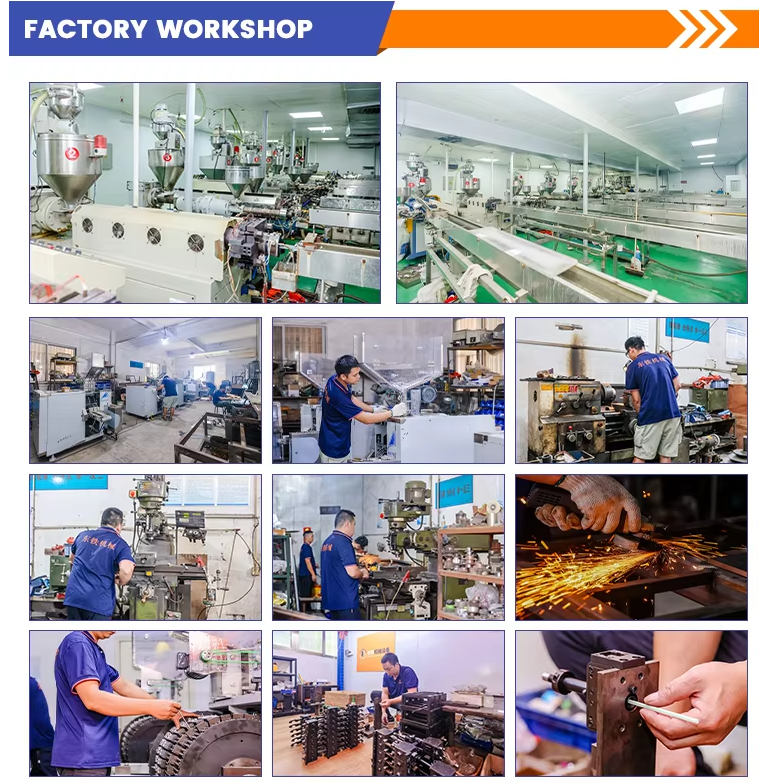
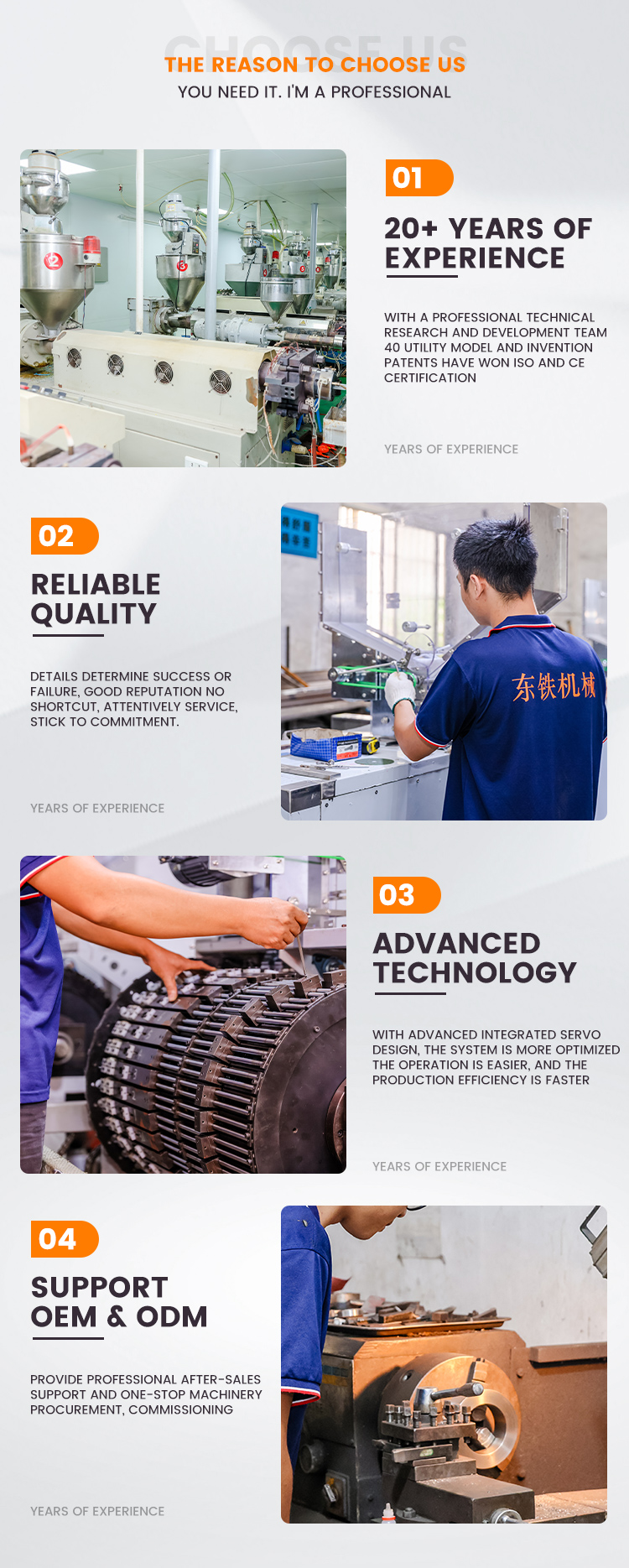
Step 7 - Agree the control and maintenance routine. The platform runs from a PLC control system that shows real-time operating status, stops automatically on a malfunction with a fault code displayed, and counts output automatically; separately adjustable embossing and forming modules reduce maintenance difficulty. Plan operator training at the same time - novice operators can master the machine with full on-site training, remote video technical guidance is available for common faults, and on-site training can be arranged in Dongtie's own straw production workshop, which is equipped with over 10 full production lines.
Regional Fit: Southeast Asian, Middle Eastern and Chinese Straw Factories
The same five setups are ordered differently depending on where the factory sells, because the finished straw mix changes with the market.
Southeast Asia. Small-diameter bendable straws and U-shaped straws dominate foodservice and boxed-drink demand, so the flexible platform and the 3.8 mm U-shaped configuration usually come first. Two operating conditions matter more here than in cooler markets: continuous running in high ambient temperatures, which puts pressure on the cooling and sealing stage, and frequent mold changeover in factories that run several diameters per week. Wide mold compatibility - a stated design advantage of the Dongtie platform - decides how much idle time a changeover costs.
Middle East. Large-caliber and pointed-tip art straws are more common because thick drinks and premium juice formats carry a bigger share of demand. That pushes the ranking toward the 12 mm large-caliber decorative configuration and the 12 mm pointed-tip setup, with wide-coverage flexible capacity added once volumes justify it. Longer runs per specification also mean large-caliber molds are used harder, so mold storage and spare mold planning matter more than changeover speed.
China. Chinese straw factories are frequently export-oriented - customs-linked trade data puts China at more than 66% of global export value in flexible straw bending machinery - which means one plant may be producing for several destination markets at once. The priority is multi-specification flexibility with consistent tolerance: one platform, several mold sets, and a plus or minus 0.05 mm diameter tolerance that holds across the whole mix.
Reading the regional section correctly: the differences above are configuration priorities for buyers, based on the straw formats each market orders most often. They are not regulatory statements, and they do not change the need to verify destination-market requirements - including import classification and machine safety documentation - before placing an order.
Comparison: Ranked Setups at a Glance
| Rank | Setup | Diameter focus | Bend / shape | Production fit |
|---|---|---|---|---|
| 1 | High-Speed Flexible Straw Forming Machine (DT-1200) | Flexible straw range, 5 mm class | Flexible bend, mold-changeable angles | Continuous flexible straw output; automation upgrades |
| 2 | High-Speed U-Shaped Straw Forming Machine | Small diameter, 3.8 mm class | U-shape for carton formats | Aseptic cartons and boxed drinks |
| 3 | 6 mm High-Speed Tube Bending Machine / 6 mm Decorative Straw Forming Machine | 6 mm | Bendable and decorative | High-volume foodservice and beverage chains |
| 4 | 12 mm Large-Caliber Decorative Straw Forming Machine | 12 mm | Large-caliber decorative | Thick drinks and large-format cups |
| 5 | 12 mm Tip High-Speed Tube Bending Machine | 12 mm | Pointed-tip art straw | Juice and nectar packs, premium decorative lines |
| Decision factor | Dongtie high-speed flexible straw forming machine | Traditional ordinary flexible-straw forming machines (as compared by Dongtie) |
|---|---|---|
| Units required for the same line | 1 unit replaces 5 traditional machines | 5 units |
| Minimum output at high speed | 1,000 straws per minute, without needle breakage | Comparison baseline |
| Processing cost | 50% reduction compared to alternatives | Reference level |
| Automation | Higher automation | Baseline |
| Mold compatibility | Wide mold compatibility | Baseline |
| Line connection | Easy line connection | Comparison baseline |
Industry reference point: published specifications for automatic straw bending machines typically quote 200-300 pieces per minute (KEZHI, 2024). Market figures cited in this article are from Market Research Future, Grand View Research, Mordor Intelligence, Dataintelo and China GACC-classified trade data.
Frequently Asked Questions
1. What compliance points should be checked before importing a bendable straw forming machine?
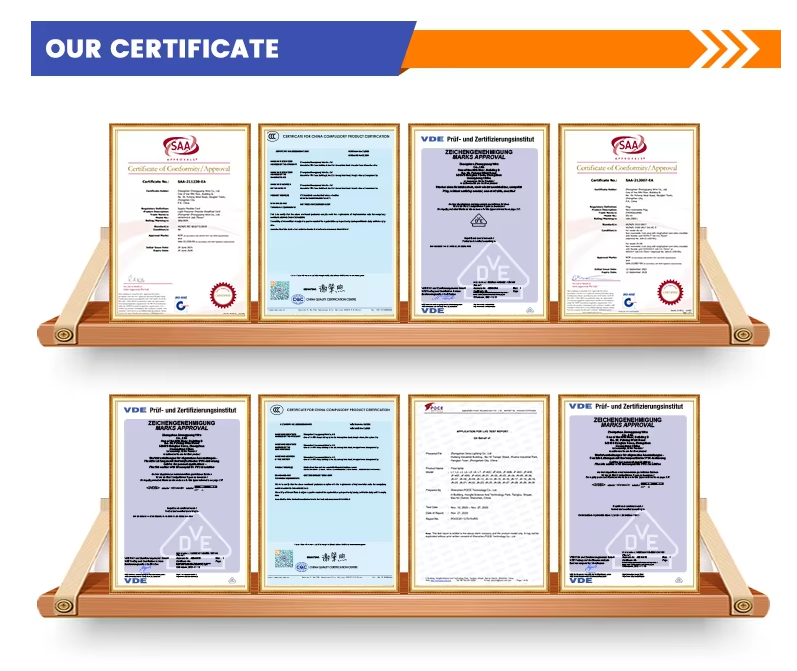
Three things, and none of them should be assumed. First, classification: China's GACC data lists HS code 84778090 as the primary classification for drinking straw machines, so the customs broker and the supplier should be working from the same code. Second, safety documentation for the destination market: machines sold in the EU must comply with the Machinery Directive 2006/42/EC and carry the CE mark, and EN ISO 12100 is the primary harmonized standard for the safety of machinery, including straw forming equipment. Third, food-contact rules where they apply, such as EU Regulation (EC) No 1935/2004, which requires that machinery must not transfer constituents to food in quantities that endanger health. On the machine side, the Dongtie platform applies self-developed patented technology under Patent No. ZL202020756632.1 and controls standard straw diameter tolerance at plus or minus 0.05 mm. Ask for the documentation set that matches your destination market before order placement rather than after shipment.
2. Can one high-speed bendable straw forming machine produce different diameters and bend angles?
Yes, the platform itself is not fixed to one specification. By changing the corresponding molds, the machine can manufacture flexible straws with different diameters and bending angles. The constraint is tooling and confirmation, not the machine: custom molds are required for different straw diameters and bending shapes, and material compatibility plus the exact mold solution should be confirmed before order placement. That is why wide mold compatibility and easy line connection are the two design differences that matter most when a high-speed setup is compared with a traditional ordinary flexible-straw forming machine.
3. How does the one-machine-replaces-five logic affect the budget?
It changes both sides of the calculation. On the capital side, one high-speed flexible straw forming machine replaces five traditional machines, which means fewer units to buy, install and connect to downstream equipment. On the operating side, the equipment offers a 50% reduction in processing cost compared to alternatives, and its minimum output of 1,000 straws per minute without needle breakage reduces the unplanned stoppages that normally sit behind reject rates. When building the comparison, put your own numbers next to those two claims: units per line, processing cost per thousand straws, and stoppage hours per month. Power consumption and energy efficiency data for the platform are available on request, so the energy line item can be completed rather than estimated.
4. How should a mold be validated for a specific diameter and bend angle before committing?
Validation starts with a complete finished-straw specification: outer diameter, wall thickness, bend angle, tip style, raw material and surface treatment. That specification is then matched to a mold solution, and material compatibility plus the mold solution should be confirmed before order placement. Two technical points are worth testing against your own tube blanks: the high-efficiency embossing process, which is designed to relax tolerance limits for tube blanks, and the standard straw diameter tolerance of plus or minus 0.05 mm, which is the figure a quality plan should hold the supplier to. Dongtie also runs its own straw production workshop, equipped with over 10 full production lines, where on-site training can be arranged so operators can see a setup running before commissioning on your own floor.
5. What is the next step to get a machine and mold set specified for a specific straw?
Send the finished straw specification - diameter, bend angle, tip style and expected monthly volume - and the mold solution can be confirmed against it, together with the matched downstream units (feeder, sealing and cooling unit, packaging machine and conveyor system) and the module settings for your tube blank. Delivery and commissioning planning are settled at quotation stage. For a configuration recommendation, a quotation or the full product catalog, contact DONGTIE MECHANICAL EQUIPMENT: email 843681276@qq.com, telephone and WhatsApp plus 86 136 8025 2932, website www.zsdtjx.com. The machine range and company profile are also available in the downloadable brochure linked at the end of this article.
Conclusion: Match the Setup to the Straw, Not to the Speed Claim
Ranking high-speed bendable straw forming machine setups by diameter and bend angle gives a buyer a repeatable decision sequence: fix the finished straw specification, confirm the mold solution and material compatibility, then match the platform and the downstream equipment to that specification. On that basis the wide-coverage High-Speed Flexible Straw Forming Machine (DT-1200) ranks first for most factories, followed by the small-diameter U-shaped configuration for carton and aseptic work, the 6 mm bendable and decorative setup for volume foodservice, the 12 mm large-caliber decorative machine for thick-drink formats, and the 12 mm pointed-tip art straw setup for specialist lines.
What the ranking does not do is treat the machines as identical. One unit replaces five traditional machines, the platform runs at a minimum of 1,000 straws per minute without needle breakage, and it delivers a 50% reduction in processing cost compared to alternatives - but those results depend on the mold being right for the straw in front of it. Buyers who settle diameter and bend angle first get the performance; buyers who buy on the speed number alone usually end up ordering molds twice.
Get a setup recommendation for your straw specification
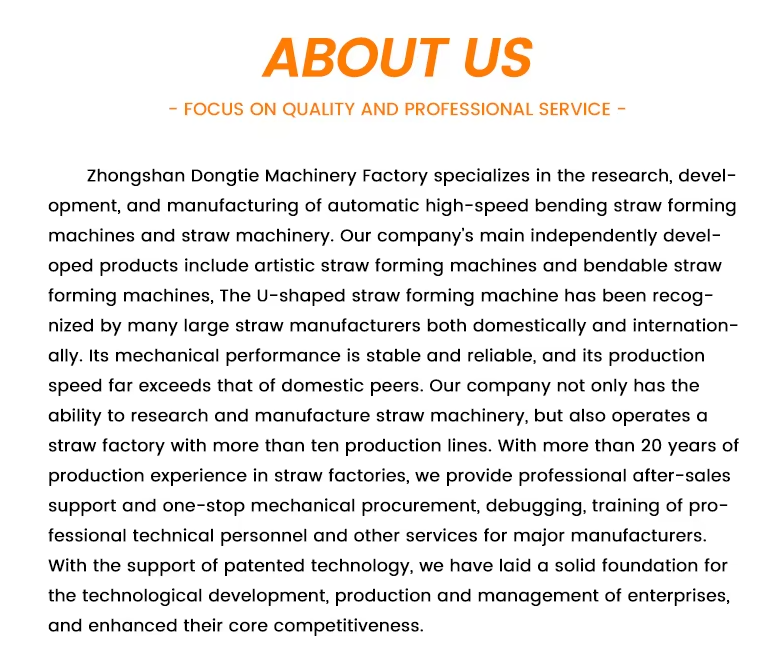
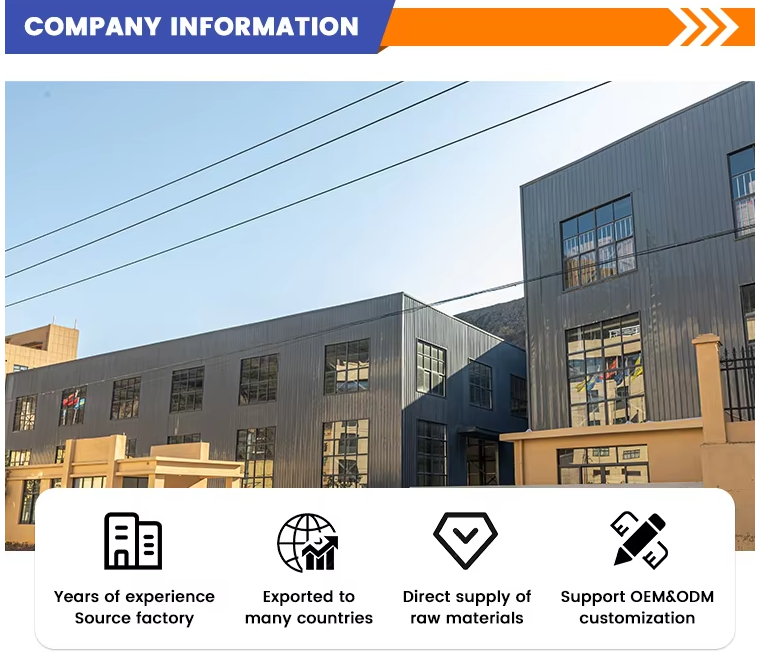
Zhongshan Dongtie Machinery Co., Ltd. has focused on straw machinery manufacturing since 2010, with 25 years of straw production experience behind its technical team, a 2,000 square metre factory, 200 sets of annual output and 50% of production going to export markets.
Send your straw diameter, bend angle and target output for a configuration and quotation: 843681276@qq.com | Tel / WhatsApp +86 136 8025 2932 | www.zsdtjx.com
Download the full catalog: Dongtie Mechanical Equipment product brochure (PDF)
Have Questions or Need More Details?
Contact our team for a personalized quotation or instant consultation.
Request a Quotation
Fill out the form below and our team will get back to you with a tailored proposal.
WhatsApp Direct Chat
Prefer to chat in real-time? Message us on WhatsApp for instant assistance & quick answers.
- Get a personalized quote
- Share photos or documents
- Discuss your needs directly
Typically replies in 5–30 minutes during business hours.