High-Speed Bendable Straw Forming Machine Application Guide: SE Asia & Middle East
High-Speed Bendable Straw Forming Machine Application Guide: SE Asia & Middle East
A high-speed bendable straw forming machine only holds its rated performance when three constraint layers line up on the buyer's site: the straw specification set the local market actually orders, the mold set built to match that specification, and the technical support that keeps the line running after commissioning. In Southeast Asia and the Middle East, most disappointing installations trace back to a mismatch in one of those three layers rather than to a slow machine.
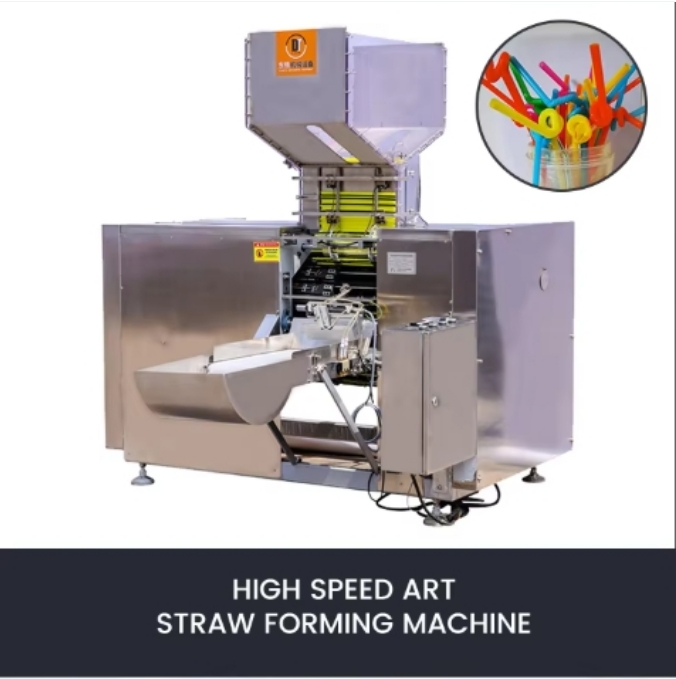
This application guide draws on deployment experience from Zhongshan Dongtie Machinery Co., Ltd. (trading as DONGTIE MECHANICAL EQUIPMENT), a straw machinery manufacturer based in Xiaolan Town, Zhongshan City, China, serving processing and packaging manufacturers through international trade platforms and overseas buyers. The reference platform is the DT-1200 high-speed flexible straw forming machine, which the manufacturer documents as running at no less than 1,000 straws per minute without needle breakage and replacing five traditional machines in a single installation.
The Real Constraint: Specification Fit, Not Rated Speed
Buyers entering the category usually compare one number — straws per minute. On an overseas site, that number is rarely what decides the project. A machine that was configured against one straw specification will not automatically run another, and the gap shows up in three places.
1. The specification set is wider than one SKU
A factory supplying beverage packers and food-service chains rarely runs a single format. Diameter, bend angle, tip profile and tube tolerance all shift between orders. Dongtie's own project record illustrates the spread: 3.8 mm U-shaped straws for domestic dairy plants, 5 mm and 6 mm flexible formats, and 12 mm large-diameter decorative formats including a 12 mm pointed-tip variant.
2. Molds, not the machine, define the output envelope
A high-speed flexible straw forming machine produces flexible straws of different diameters and bending angles by changing the corresponding molds. Custom molds are required for each straw diameter and bend shape, and material compatibility plus the mold solution are confirmed before order placement. Buying the machine without settling the mold set is the single most common reason a new line sits idle in its first month.
3. Support distance is a real production constraint
Overseas factories carry the same output target as domestic ones but a longer path to a technician. Installation and commissioning, remote technical support and spare parts supply therefore belong in the purchase decision, not in the afterthought column.
Why Southeast Asia and the Middle East Are Re-Tooling Now
The demand context explains why buyers in these regions are replacing conventional and semi-automatic lines rather than buying their first machine.
- Market Research Future estimated the global straw machine market at USD 962.55 million in 2024, with projections reaching USD 1,793.41 million by 2035 at a CAGR of 5.82%.
- Grand View Research valued the global paper straw market at USD 2.6 billion in 2024, which pulls machinery demand along with it.
- Plastic straw machines still hold significant market share in regions such as Asia-Pacific and Africa despite bans in the EU, so upgrade demand in these regions is driven by cost and output rather than by regulation alone.
- Data attributed to Zauba and US customs records indicates China accounts for more than 66% of the global export value of flexible straw bending machinery, which means most buyers in Southeast Asia and the Middle East are sourcing from Chinese manufacturers.
- Mordor Intelligence notes that the U-shaped straw machine segment is growing specifically for the aseptic packaging industry, such as milk cartons — a format that is standard in Southeast Asian and Chinese dairy supply chains.
The practical consequence for a factory in Malaysia, Vietnam, the UAE or Saudi Arabia is that machine availability is not the bottleneck. Specification fit and post-sale support are.
What a High-Speed Bendable Straw Forming Machine Must Deliver On Site
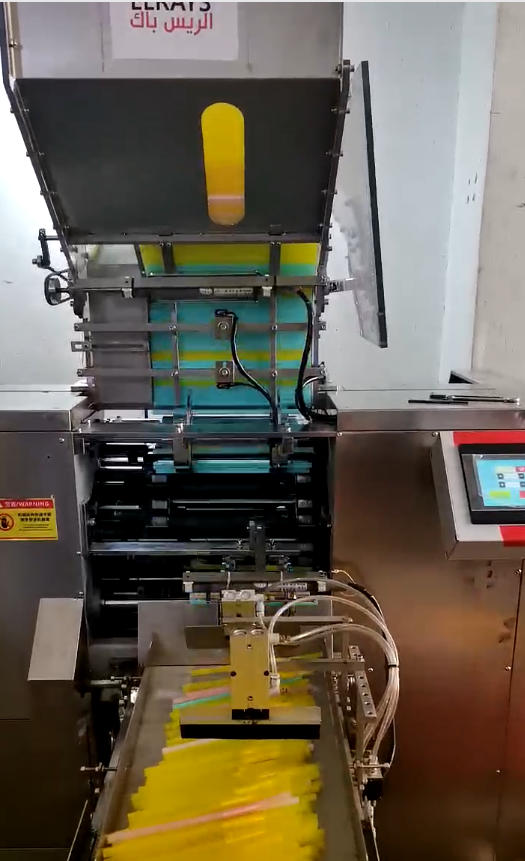
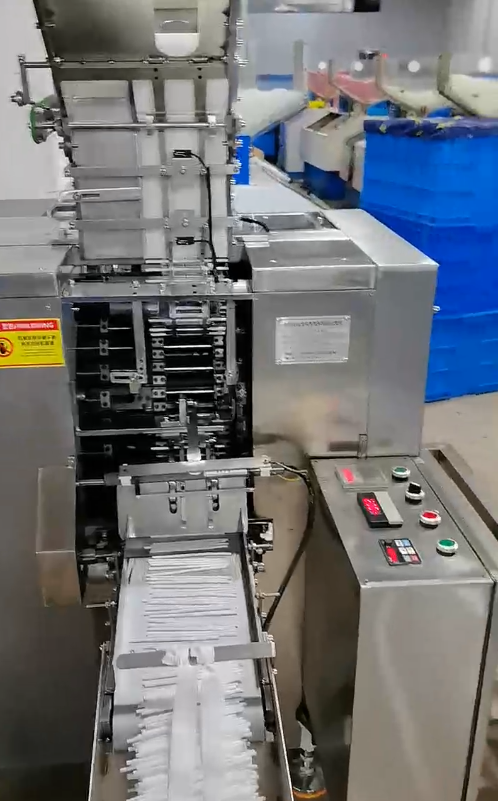
The DT-1200 is a fully automatic, stainless-steel flexible straw forming machine built around patented forming components. Its published constraints are the useful part of the specification, because each one maps to a site planning decision.
| Constraint | Published value | What it means for the buyer |
|---|---|---|
| Model | DT-1200 | Single-model reference platform for the flexible straw range |
| Rated power | 5.5–6.5 kW | Sizing of the workshop power supply and connection plan |
| Protection grade | IP55 | Suited to normal-temperature workshop conditions with dust and splash exposure |
| Working pressure | 1.500–6.000 MPa | Compressed-air specification for the site |
| Working temperature | 100–200 °C | Process window for the forming section; ambient ventilation planning |
| Construction material | Stainless steel | Corrosion resistance in humid coastal climates |
| Standard straw diameter tolerance | ±0.05 mm | Tighter blank acceptance, fewer rejects at the packing end |
| Core forming components | Patented technology, Patent No. ZL202020756632.1 | Addresses the industry's high-speed needle breakage problem |
| Utility model certificate | No. 12166973, issued by the China National Intellectual Property Administration, valid until 2030-05-09 | Documented IP reference; mainly valid in China, product can be sold worldwide |
| Designed service life of wearing parts | Forming needles and molds: over 1 year | Sets the spare-parts planning interval |
| Verified output floor | No less than 1,000 straws per minute | Capacity per machine for line balancing |
| Control | PLC with real-time status display, fault codes on auto-stop, automatic counting | Faults are readable by line staff instead of requiring a specialist call-out |
| Commercial constraints | MOQ 1 set; lead time 30 days; monthly capacity 20 sets | Purchase planning and shipment scheduling |
Tolerance and wear life decide the running cost
Two constraints in that table carry most of the operating economics. First, the high-efficiency embossing technology relaxes tolerance limits for tube blanks while holding standard straw diameter tolerance at ±0.05 mm, which means lower-grade blanks can be accepted without losing dimensional consistency at the packing end. Second, the designed service life of forming needles and molds exceeds one year, and those parts are reinforced with special materials and craftsmanship. Separately adjustable embossing and forming modules further reduce maintenance difficulty, and the precision feeding unit supports long-term stable operation.
Mold tuning is where local specification adaptation happens
Local straw specification adaptation is a mold project, not a machine modification. Middle East buyers have ordered decorative formats such as 10 mm art straws; Southeast Asian factories work heavily in 5 mm and 6 mm flexible formats; domestic Chinese dairy suppliers run 3.8 mm U-shaped straws. Each of those formats is a distinct mold set, and the machine's modular design allows switching between calibers and bending angles when formats change. Dongtie develops tailor-made equipment against a customer's specific size and shape requirements, and the full customizable scope is confirmed with the sales team before an order is placed.
Five traditional machines replaced by one
The productivity argument is documented in deployment results rather than a brochure claim. One high-speed flexible straw forming machine replaces five traditional machines, runs at high speed without needle breakage, and outputs at least 1,000 straws per minute. That combination — fewer machines on the floor, one operator attention point per line, and consistent finished product quality — is what overseas buyers are actually purchasing when they upgrade from manual or semi-automatic processes.
Site Deployment Step by Step
The sequence below reflects how Dongtie installations have been run across Southeast Asian, Middle Eastern and domestic Chinese plants. It is written from the buyer's side, because most delays are buyer-side decisions made before the machine ships.
Step 1 — Define the straw specification set
List every diameter, bend angle and tip profile the factory expects to sell in the next 24 months, including the low-volume decorative items. The machine supports multiple formats through mold changes, but each format must be declared before the mold package is built.
Step 2 — Lock the mold solution and material compatibility
Custom molds are required for different straw diameters and bending shapes, and special standards apply to raw material specifications and surface treatment. Material compatibility and the mold solution are confirmed before order placement — this is the step that prevents a mismatch from appearing after arrival.
Step 3 — Plan utilities and workshop conditions
The working condition is a normal-temperature workshop with a stable power supply, raw material feeding and production line connection suited to continuous mass production. Size the electrical supply against 5.5–6.5 kW, the compressed-air system against 1.500–6.000 MPa, and confirm ventilation against the 100–200 °C working temperature of the forming section.
Step 4 — Confirm line position: standalone or connected
The machine runs fully automatic with manual monitoring and regular maintenance, and can work standalone or be connected to a line with a feeder, sealing and cooling unit, packaging machine and conveyor system. Decide this before shipment, because the connection scheme is part of the customization scope.
Step 5 — Factory test run and inspection record
Quality control includes a pre-delivery test run and functional verification, and factory inspection reports can be provided on request. Ask for the record against your own mold set and straw specification, not against a catalogue sample.
Step 6 — Installation and commissioning on site
After-sales service covers installation and commissioning, remote technical support and spare parts supply. Warranty terms and response time are best confirmed before purchase rather than assumed at the contract stage.
Step 7 — Operator training
On-site training can be arranged in Dongtie's own straw production workshop, which runs more than 10 full production lines. Training on a running line is materially different from training on a slide deck, especially for mold changeover.
Step 8 — Remote guidance and the spare-parts plan
Remote video technical guidance is available for common faults. Because the PLC displays real-time operating status, auto-stops on malfunction with fault codes shown on screen, and counts output automatically, most first-line problems can be described precisely enough for a remote diagnosis. Plan the first spare-parts order around the over-one-year designed life of forming needles and molds.
Three Project Scenarios: Middle East, Southeast Asia, Domestic China
Middle East — decorative and large-diameter formats
Middle East buyers have sourced 10 mm decorative straws, a format that sits at the large-diameter end of the range alongside the 12 mm large-caliber decorative straw forming machine and the 12 mm pointed-tip high-speed tube bending machine. The deployment lesson here is mold-led: art and decorative formats change more often than commodity flexible straws, so the mold changeover routine and the quick-change modular design matter more than raw line speed.
Southeast Asia — flexible formats at volume
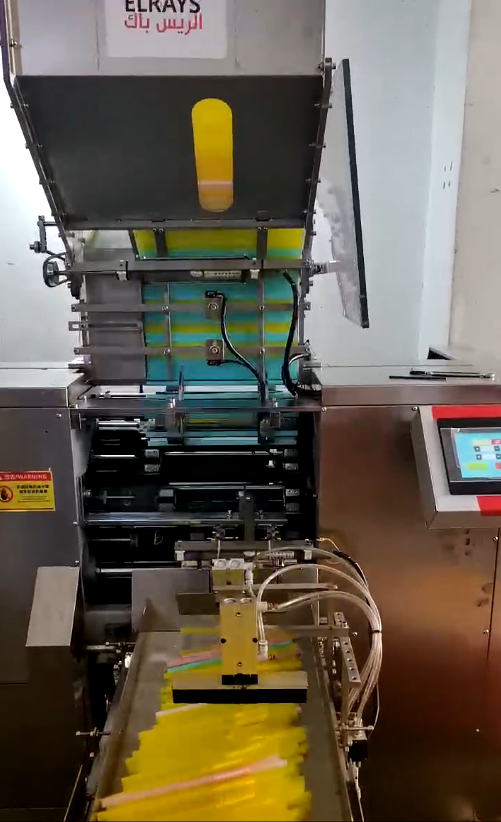
Southeast Asian straw factories typically run flexible 5 mm and 6 mm formats at high volume for beverage packers and food-service chains, and use the upgrade to replace manual or semi-automatic processes. Because plastic straw machines still hold significant market share in Asia-Pacific, the competitive pressure is cost per straw, which is why the five-to-one replacement ratio — rather than any single machine feature — is the argument that closes these projects.
Domestic China — small-diameter U-shaped for dairy
Domestic Chinese manufacturers supplying dairy and aseptic packaging run small-diameter U-shaped straws, including the 3.8 mm format. The tightening comes from tolerance: with straw diameter tolerance held at ±0.05 mm, U-shaped straws feed more reliably into carton applicators, and the automatic counting function gives the packing department a clean production figure per shift.
Documentation that travels with the machine
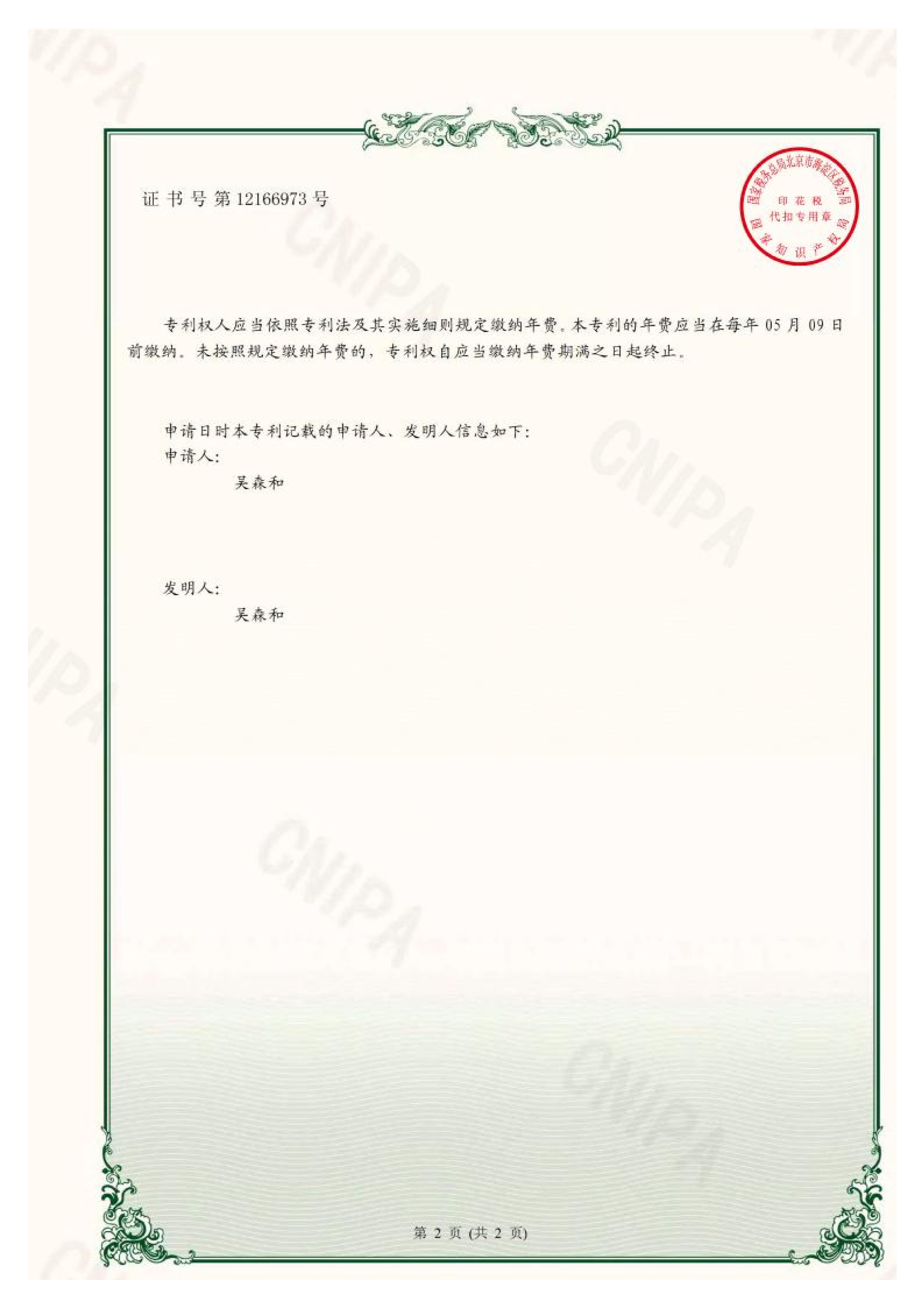
The High-Speed Flexible Straw Forming Machine (Model DT-1200) is protected by Certificate of Utility Model Patent No. 12166973, issued by the China National Intellectual Property Administration on 2020-12-18 and valid until 2030-05-09. The certificate is mainly valid in China while the product can be sold worldwide, which is the relevant nuance for an export buyer: it confirms the forming technology is registered, not that it substitutes for destination-market machinery approval.
One Machine Against Five Conventional Machines
The comparison below uses only published specifications and industry reference data. It is intended as a planning tool, not as a claim about any specific competitor's equipment.
| Comparison metric | DT-1200 high-speed bendable straw forming machine | Conventional automatic bending machine (industry reference) |
|---|---|---|
| Units needed for an equivalent output envelope | 1 unit replaces 5 traditional machines (documented deployment result) | Multiple units typically combined to reach the same capacity |
| Throughput | No less than 1,000 straws per minute (verified output floor) | Typically 200–300 pcs/min per industry engineering specifications (KEZHI, 2024) |
| Needle breakage at speed | Patented forming components (Patent No. ZL202020756632.1) built to hold high-speed runs without needle breakage | Not standardized across suppliers; verify per supplier |
| Diameter tolerance | ±0.05 mm standard straw diameter tolerance | Not standardized across suppliers; verify per supplier |
| Format changeover | Modular design allows switching between calibers and bend angles via mold change | Mold-dependent; changeover time varies by supplier |
| Wearing-part life | Forming needles and molds designed for over 1 year of service | Not standardized; confirm replacement intervals |
| Fault visibility | PLC with real-time status, auto-stop with fault codes, automatic counting | Varies by control package |
| Documented certification | Utility model certificate No. 12166973 (CNIPA), valid until 2030-05-09 | Varies by supplier and origin |
Frequently Asked Questions
Which compliance documents should a Southeast Asian or Middle Eastern factory verify before ordering?
CE marking is not the governing requirement for destinations in Southeast Asia and the Middle East; it applies when machinery is placed on the EU market, where Directive 2006/42/EC requires the CE mark, EN ISO 12100 is the primary harmonized machinery safety standard, and Regulation (EC) No 1935/2004 governs transfer of constituents to food. For a DT-1200 order, the documents available are the Certificate of Utility Model Patent No. 12166973 issued by the China National Intellectual Property Administration and valid until 2030-05-09, plus factory inspection records covering a pre-delivery test run and functional verification, with inspection reports provided on request. Confirm your own import documentation requirements, and confirm warranty terms and response time, before purchase.
Can one high-speed bendable straw forming machine cover the diameters and bend angles our market buys?
Yes, within the mold package purchased. By changing the corresponding molds, the machine manufactures flexible straws of different diameters and bending angles. Dongtie's range covers small-diameter U-shaped formats such as 3.8 mm, 5 mm flexible formats, 6 mm high-speed bending formats, and 12 mm large-diameter and 12 mm pointed-tip decorative formats, each with its own mold. Custom molds are required for every diameter and bend shape, and material compatibility plus the mold solution should be confirmed before order placement.
What utility and maintenance cost lines follow from the published specifications?
Rated power is 5.5–6.5 kW, protection grade is IP55, working pressure is 1.500–6.000 MPa, working temperature is 100–200 °C, and construction is stainless steel. The maintenance budget is driven by forming needles and molds, whose designed service life exceeds one year; separately adjustable embossing and forming modules reduce maintenance difficulty, and the precision feeding unit supports long-term stable operation. On the site side, plan a normal-temperature workshop with a stable power supply, raw material feeding, and either standalone operation or connection to a production line.
How is performance validated before shipment and again at the overseas site?
Factory inspection includes a pre-delivery test run and functional verification, and factory inspection reports can be provided on request. Overseas, the after-sales scope covers installation and commissioning, remote technical support and spare parts supply. Common faults can be handled through remote video technical guidance, and on-site training can be arranged in Dongtie's own straw production workshop, which is equipped with more than 10 full production lines. Warranty terms and response time are best fixed in the contract rather than assumed.
What are the MOQ, lead time and spare-parts position for an export order?
Minimum order quantity is 1 set, lead time is 30 days, and monthly capacity is 20 sets. Export markets include Southeast Asia, the Middle East, Europe and other global markets. Spare parts supply is part of the after-sales scope, and the first replacement interval should be planned around the over-one-year designed life of forming needles and molds. To move from specification to quotation, download the Dongtie product brochure and send your straw specification set and target output per shift to the contact below.
What to Fix Before You Order
For a Southeast Asian or Middle Eastern straw factory, the decision comes down to four fixed points. Define the straw specification set, including decorative and large-diameter formats. Lock the mold solution and confirm material compatibility in writing. Size the site against 5.5–6.5 kW, 1.500–6.000 MPa and a normal-temperature workshop with a stable power supply. And settle the support package — installation and commissioning, remote video guidance, operator training and spare parts supply — before the machine leaves China.
Zhongshan Dongtie Machinery Co., Ltd. brings a technical team with 25 years of straw production experience to that process, with equipment built on self-developed patented technology (Patent No. ZL202020756632.1) and roughly half of its output exported. The measured results from 60 installations over three years are consistent: one machine replacing five traditional machines, no needle breakage at speed, and at least 1,000 straws per minute in continuous operation.
Next step: match the machine to your straw specification
Send your diameter list, bend angles and target output per shift, and Dongtie will confirm the mold solution, the machine configuration and the installation plan for your site.
Brochure: Download the Dongtie catalogue (PDF)
Website: www.zsdtjx.com
WhatsApp / Tel: +8613680252932 | Email: 843681276@qq.com
Contact: Quanhe Wu | Address: 23-3/F, Xicheng Road, West District, Xiaolan Town, Zhongshan City, China
Have Questions or Need More Details?
Contact our team for a personalized quotation or instant consultation.
Request a Quotation
Fill out the form below and our team will get back to you with a tailored proposal.
WhatsApp Direct Chat
Prefer to chat in real-time? Message us on WhatsApp for instant assistance & quick answers.
- Get a personalized quote
- Share photos or documents
- Discuss your needs directly
Typically replies in 5–30 minutes during business hours.