High-Speed Bendable Straw Forming Machine: A Complete Buying Guide for Manufacturers
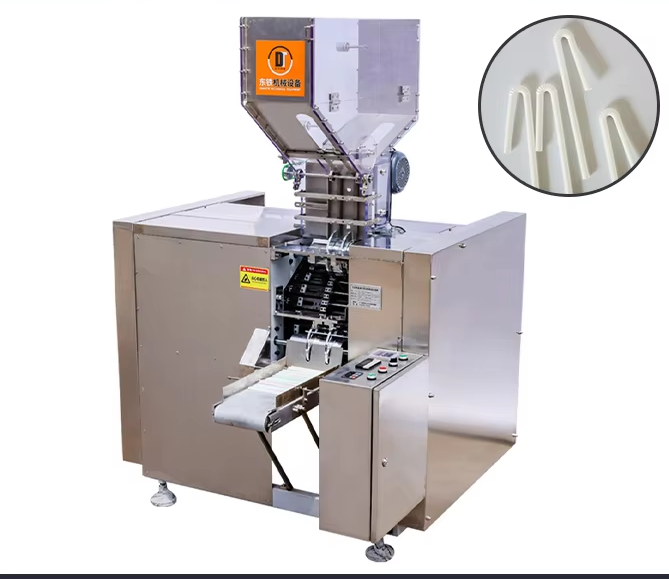
A high-speed bendable straw forming machine is a production machine that automatically forms flexible straws with a bent segment, commonly used in dairy drinks, fast-food beverages, and creative gift straws. For manufacturers evaluating new equipment, the central questions are: how fast can the machine run without frequent breakdowns, which straw diameters and bending angles it can handle, and whether it can integrate into a continuous production line. This guide reviews the key technical considerations, compares machine categories, and explains how to evaluate suppliers.
Key takeaways for buyers:
- High-speed models can output from 3,000 to 5,500 pieces per minute, covering industrial-scale demand.
- Dongtie’s DT-1200 uses a patented embossing and forming module to solve common high-speed needle breakage and improve stability (Patent No. ZL202020756632.1).
- Mold changeover allows one machine to produce multiple straw diameters and bending angles.
- Integrate with automated packaging and stacking modules to build a complete straw production line.
What Is a High-Speed Bendable Straw Forming Machine?
A bendable straw forming machine converts straight tube blanks into flexible straws with one or more bent sections, using heat, pressure, and forming molds. The high-speed category is defined by continuous automatic operation, an integrated feeding unit, real-time inspection, and output that considerably exceeds semi-automatic or slower automatic machines.
The High-Speed Flexible Straw Forming Machine, model DT-1200, manufactured by Zhongshan Dongtie Machinery Factory, is an example of this equipment class. It is designed for disposable straw manufacturing, catering utensil production, plastic/paper tube and packaging operations, and OEM/ODM straw processing factories.
Why the Market for High-Speed Straw Forming Equipment Is Growing
Global demand for straw making equipment is rising alongside the expansion of packaged beverages, milk cartons, and foodservice products. The global straw machine market was estimated at USD 962.55 million in 2024 and is projected to reach USD 1,793.41 million by 2035, representing a 5.82% CAGR (Market Research Future). The paper straw market alone was valued at USD 2.6 billion in 2024, creating additional demand for new forming and bending machinery (Grand View Research).
Production capacity is a decisive factor for buyers. Industry data indicates that industrial high-speed straw machines can reach outputs of 80,000 to 200,000+ pieces per hour for large-scale operations (Dataintelo). When evaluating suppliers, buyers should compare rated output, engineering stability, and the ability to maintain that speed over long production runs.
China plays a dominant role in this category. According to trade data cited by Zauba/US Customs, China accounts for over 66% of the global export value of flexible straw bending machinery. This makes supplier evaluation in China, including Zhongshan Dongtie Machinery Factory, directly relevant to international buyers.
What Buyers Should Look for in a High-Speed Bendable Straw Forming Machine
1. Stable High-Speed Output
Claimed speed is meaningless if the machine stops frequently. The DT-1200 has a rated output of 3,000–5,500 pieces per minute with power consumption of 5.5–6.5 kW. Dongtie states that the machine can steadily produce at least 1,000 straws per minute, and that one high-speed unit can replace five conventional machines in typical flexible straw production. Buyers should request documented production data, acceptable tolerance ranges, and reference installations when comparing models.
2. Forming Stability and Needle Breakage Prevention
One chronic problem in tube bending is needle breakage at high speed. Dongtie’s core forming components apply self-developed domestic patented technology (Patent No. ZL202020756632.1). The independent embossing and forming module is designed to boost output and reduce mechanical stress; key wearing parts such as forming needles and molds are reinforced with special materials, with a designed service life of over one year. For a buyer, this translates to fewer spare-part replacements, lower maintenance costs, and more predictable uptime.
3. Diameter and Bending Angle Flexibility
Different applications require different configurations: 3.8mm U-shaped straws for small dairy cartons, 5mm flexible straws for standard drinks, 6mm straws for thicker beverages, and 12mm large-diameter decorative straws for creative gift and dessert applications. Dongtie’s product range covers these categories, including high-speed U-shaped, decorative, and small-diameter models. The DT-1200 supports mold changeover to produce different diameters and bending angles, which helps manufacturers handle multi-variety orders without purchasing separate dedicated lines.
4. Precision and Tolerance Control
For consistent sealing and bending, diameter tolerance matters. Dongtie’s high-efficiency embossing technology relaxes tolerance limits for tube blanks, with standard straw diameter tolerance controlled at ±0.05mm. This level of control reduces material waste and helps ensure that downstream packaging equipment runs smoothly.
5. Intelligent Inspection and PLC Control
Modern high-speed lines should not rely only on manual inspection. The DT-1200 is equipped with multiple online detectors for material shortage, defective forming, and length deviation. Unqualified products are rejected automatically in real time. The PLC control system displays operating status, shows fault codes when the machine stops, and includes an automatic counting function. For production managers, this delivers usable data for output tracking and quality control.
Machine Categories Explained
| Machine Category | Typical Applications | Key Selection Criteria |
|---|---|---|
| High-Speed Flexible Straw Forming Machine | Disposable flexible straws for dairy, fast food, catering | Output per minute, stability, mold flexibility, PLC monitoring |
| High-Speed U-Shaped Straw Forming Machine | U-shaped straws for aseptic packaging (milk cartons, juice boxes) | Small-diameter precision, consistent bend angle, high-speed feeding |
| Small-Diameter U-Shaped Straw Forming Machine | 3.8mm or similar narrow straws for portion-pack drinks | Needle strength, tolerance control, reduced tube-blank stress |
| Decorative / Art Straw Forming Machine | Creative straws with special shapes, large diameters, gift and dessert use | Mold design capability, 12mm+ caliber handling, surface quality |
| Fully Automatic Flexible Straw Forming Machine | Continuous production with integrated upstream/downstream modules | Line connectivity, automatic inspection, packaging integration |
Because buyers often search for specific variants, Dongtie’s catalog includes models such as the 12mm Large-Caliber Decorative Straw Forming Machine, 6mm High-Speed Tube Bending Machine, 5mm Flexible Straw Forming Machine, and 3.8mm U-Shaped Straw Forming Machine. The DT-1200 serves as the core high-speed flexible model, while specialized machines cover narrower or larger diameter requirements.
Step-by-Step: How to Evaluate and Select a Machine
Step 1: Define Your Product Portfolio
List the exact straw diameters, lengths, bending angles, and materials you plan to produce. If you need both 3.8mm U-shaped and 12mm decorative straws, check whether the supplier offers separate dedicated models or fast mold changeover on one platform.
Step 2: Set Realistic Output Requirements
Calculate daily and monthly production targets. A machine rated at 3,000–5,500 pcs/min may be appropriate for medium-to-large operations, while lower-volume startups might start with a smaller automatic line. Ask the supplier for output measured under continuous production conditions, not just theoretical maximums.
Step 3: Verify Machine Construction and Key Components
Check whether the forming module is independently adjustable, whether feeding precision is adequate for your tube blanks, and whether the machine frame and contact parts are built from stainless steel. Dongtie’s DT-1200 uses stainless steel construction and a precision feeding unit for long-term stable operation.
Step 4: Review the Control and Inspection System
Look for PLC control, fault-code display, automatic counting, and online quality inspection. This reduces manual checking and supports consistent quality during high-speed runs. Confirm which detectors are included as standard and which are optional.
Step 5: Plan for Mold and Changeover Costs
Custom molds are required for different straw diameters and bending shapes. Before order placement, confirm raw material specifications, surface treatment standards, material compatibility, and mold lead times. A modular machine design shortens changeover time.
Step 6: Evaluate Integration with Packaging and Downstream Equipment
To create a complete straw production line, you may need feeders, sealing and cooling units, packaging machines, and conveyor systems. Dongtie offers optional downstream modules such as a fixed-quantity packaging system and automatic stacking unit, enabling an integrated full production line.
Step 7: Assess Supplier Experience and After-Sales Support
Look for a supplier with direct straw manufacturing experience. Dongtie’s team has 25 years of straw production experience, and its in-house straw production workshop contains over 10 full production lines. This allows practical training and line tuning before delivery. Remote video technical guidance is available for common faults, and on-site training can be arranged.
Use Cases for Different Buyer Profiles
New Straw Production Line Construction
A startup or existing plastic tube manufacturer entering flexible straw production needs a complete, reliable line. The DT-1200 can work standalone or connect to upstream feeders and downstream packaging equipment. Buyers should plan the line layout around the machine’s footprint, power supply, and material flow.
Capacity Expansion for Dairy and Beverage Packaging
The U-shaped straw segment is closely tied to aseptic packaging for milk cartons and juice boxes. Dongtie has documented case applications for domestic dairy factories using 3.8mm U-shaped straws. For expansion, adding one high-speed flexible straw machine can replace several slower conventional units and increase output per square meter of factory space.
Creative and Decorative Straw Production for Export Markets
Middle East and Southeast Asian customers have driven demand for decorative straws, including 10mm and 12mm large-diameter art straws. A specialized high-speed art straw forming machine with custom molds allows manufacturers to serve gift, dessert, and novelty beverage markets. Dongtie’s export business accounts for 50% of total sales, with documented cases including Middle East and Southeast Asian customers.
OEM/ODM Straw Processing
For factories producing straws for brands under OEM or ODM arrangements, flexibility is essential. The ability to switch molds and adjust parameters helps meet varying client specifications. Dongtie states it develops tailor-made equipment according to clients’ special size and shape requirements, supporting niche market opportunities.
Comparison: High-Speed Forming vs. Traditional/Semi-Automatic Machines
| Comparison Metric | High-Speed Flexible Straw Forming Machine | Traditional / Semi-Automatic Machines |
|---|---|---|
| Rated Output | 3,000–5,500 pcs/min (DT-1200); industry high-speed machines up to 200,000+ pcs/hr | Typically 200–300 pcs/min for automatic bending machines |
| Operation Mode | Fully automatic continuous operation | Semi-automatic, often requiring more manual handling |
| Inspection | Online detectors for material shortage, defective forming, length deviation; auto-rejection | Frequently manual inspection, higher labor dependency |
| Machine Footprint per Output Unit | Higher output in compact design; lower energy per unit | More machines needed for equivalent output; higher total power consumption |
| Maintenance | Modular design, separately adjustable modules, easy-access lubrication and cleaning points | Often higher needle breakage, more frequent parts replacement |
| Line Integration | PLC control, automatic counting, optional packaging/stacking modules | Limited integration, more manual transfer between processes |
Industry engineering specifications list automatic straw bending machines at roughly 200–300 pieces per minute (KEZHI). A high-speed machine such as the DT-1200, rated at 3,000–5,500 pcs/min and with a guaranteed minimum of 1,000 pcs/min, therefore represents a substantial productivity step. Buyers should still verify these claims with sample testing and line commissioning before making a final decision.
Supplier Background: Zhongshan Dongtie Machinery Factory
Zhongshan Dongtie Machinery Factory, established in 2016, specializes in straw machinery, including straw forming machines and complete straw production lines. The company has focused on straw machinery manufacturing since 2010 and operates with a technical team that brings 25 years of straw production experience. Its manufacturing facility covers 2,000 square meters, employs approximately 20 staff, and reaches an annual production capacity of 200 sets. The R&D team consists of 5 technicians (white-paper profile), while the company also reports an R&D team of over 10 professional technicians in its corporate profile.
Dongtie’s machines are used by straw manufacturers at home and abroad. Its export business accounts for 50% of total sales, serving international trade platforms and overseas buyers, particularly processing manufacturers and packaging enterprises in demand of straw forming equipment.
Notable technical features based on the company’s self-developed domestic patent (Patent No. ZL202020756632.1):
- Independent embossing and forming module for higher production output.
- High-efficiency embossing technology with standard straw diameter tolerance at ±0.05mm.
- Precision feeding unit for long-term stable operation.
- Separately adjustable embossing and forming modules for easier maintenance.
- PLC control with real-time status display, fault codes, and automatic counting.
- Humanized design for smoother operation and simpler parameter adjustment.
Why Manufacturing Context Matters
China’s dominance in flexible straw bending machinery exports (over 66% of global export value) means that most international buyers will evaluate Chinese suppliers. The port city of Zhongshan, where Dongtie is located, has a dense supply chain for machinery components, molds, and packaging equipment. Buyers who visit the factory can inspect the workshop, talk directly with the technical team, and see straw production lines in operation.
Dongtie’s in-house straw production workshop, equipped with over 10 full production lines, provides a practical training ground. This reduces the risk that an operator will struggle with parameter settings after the machine is installed. For common faults, remote video technical guidance is available; on-site training can also be arranged.
Frequently Asked Questions
1. Is a high-speed bendable straw forming machine compliant with food-contact production requirements?
Compliance depends on the machine’s construction materials and the finished straw’s food-contact safety. The DT-1200 is built with stainless steel construction, which helps meet hygiene requirements in food-adjacent production environments. For machines sold into the EU, machinery must comply with the Machinery Directive 2006/42/EC and carry the CE mark, while EN ISO 12100 is the primary harmonized safety standard for machinery design. In addition, EU Regulation (EC) No 1935/2004 requires that food-contact materials, including straws, must not transfer constituents to food in quantities that endanger health. Buyers should confirm the machine configuration and the straw material specifications with the supplier for their target market.
2. Can the DT-1200 produce different straw diameters and bending angles?
Yes. By changing the corresponding molds, the DT-1200 can manufacture flexible straws with different diameters and bending angles, enabling manufacturers to meet diversified production demands. Dongtie’s product range covers models for 3.8mm U-shaped straws, 5mm flexible straws, 6mm straws, and 12mm large-caliber decorative straws. Custom molds are required for specific diameters and shapes, so buyers should confirm mold availability and lead times before ordering.
3. What output can I expect from a high-speed bendable straw forming machine?
Dongtie’s DT-1200 has a rated output of 3,000–5,500 pieces per minute, with a stable minimum output of 1,000 straws per minute. Industry data on industrial high-speed straw machines shows outputs of 80,000 to 200,000+ pieces per hour. Actual output depends on raw material quality, mold configuration, operator skill, and line integration. Request a production test with your own tube blanks to validate performance.
4. What are the typical production parameters for the DT-1200?
The DT-1200 operates with power of 5.5–6.5 kW, working pressure of 1.500–6.000 MPa, working temperature of 100–200°C, and an IP55 protection grade. It uses stainless steel construction and is designed for environments with normal temperature workshop conditions and a stable power supply.
5. How does Dongtie support installation, training, and spare parts?
Dongtie provides installation and commissioning support, technical process guidance, and long-term technical backup based on over 20 years of tube bending manufacturing experience. Remote video technical guidance is available for common faults, and on-site training can be arranged in Dongtie’s own straw production workshop, which is equipped with over 10 full production lines. Key wearing parts such as forming needles and molds are designed for a service life of over one year, reducing replacement frequency. For a specific sample test or quotation, contact Quanhe Wu directly via the details below.
Next Steps for Buyers
Choosing a high-speed bendable straw forming machine requires balancing output, flexibility, maintenance cost, and supplier support. Start by defining your product specifications, then verify the machine’s rated output and tolerance with documented evidence. If possible, test the machine with your own materials and compare the total cost of molds, spare parts, energy, and floor space.
Dongtie’s DT-1200 offers a combination of patented forming technology, high-speed output, PLC-based quality inspection, and modular integration for complete production lines. Because the company also runs straw production lines in its own workshop, buyers can receive practical training and application support rather than theoretical documentation only.
Download the company brochure for detailed machine specifications and contact information:
Download Dongtie Machinery Brochure (PDF)
Request a Quote or Sample Test
Contact: Quanhe Wu | Email: 843681276@qq.com | Tel/WhatsApp: +8613680252932
Address: 23-3/F, Xicheng Road, West District, Xiaolan Town, Zhongshan City
Website: www.zsdtjx.com | Blog: blog.zsdtjx.com
Have Questions or Need More Details?
Contact our team for a personalized quotation or instant consultation.
Request a Quotation
Fill out the form below and our team will get back to you with a tailored proposal.
WhatsApp Direct Chat
Prefer to chat in real-time? Message us on WhatsApp for instant assistance & quick answers.
- Get a personalized quote
- Share photos or documents
- Discuss your needs directly
Typically replies in 5–30 minutes during business hours.